General Information

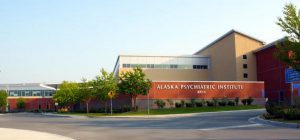
Alaska Psychiatric Institute (API) is the only public psychiatric hospital in the State of Alaska. API provides acute, inpatient mental health services for anyone in Alaska requiring hospitalization for a psychiatric crisis. The vast majority of patients served at this hospital are experiencing severe and persistent mental illnesses. Most patients also have complex trauma histories in conjunction with substance use issues, requiring the treating professionals to maintain a high level of familiarity with evidence-based practices for multiple presenting problems. In addition, API serves as the safety net and crisis-stabilization facility for adults with developmental disabilities as well as seniors with dementia whose behavior and/or level of illness prevents them from remaining in their current placement. These patients often require intensive evaluation and innovative behavioral interventions to stabilize them and return them to a less restrictive environment in the community. The 80-bed state hospital is located in Anchorage and has two adult clinical units, one adult unit cohorting individuals with neurodevelopmental and neurocognitive disorders, one adolescent unit, and one adult forensic unit. API is a teaching hospital and is adjacent to the University of Alaska Anchorage. Graduate students in other professional medical programs also complete clinical rotations and practica at the hospital. Most individuals at API are admitted on a court order (for danger to self, danger to others, and/or grave disability) and must be assessed to determine if they continue to meet criteria for involuntary admission or the involuntary administration of medication. Legal hearings on these issues are held at the hospital several times per week.
Additionally, API is currently the only location in the state that provides competency restoration treatment for individuals who have been found by the Court to be Incompetent to Stand Trial.
Experience at API will provide interns ample opportunity to expand cultural competency as Anchorage has a culturally and linguistically diverse population (the local school district serves families from more than 90 distinct language groups). Persons served within the hospital in 2019 self-reported approximately 41% as Caucasian and 38% as Alaska Native, 8% as African American, 13% as ‘other’. In 2019, API primarily treated adults ages 18 and older with 40% self-reporting as female, 60% as male. Only eight (8) adolescents ages 13-17 years were treated in 2019, prior to the treatment unit closing. As of Spring 2021, the adolescent unit reopened, and is currently at full capacity, with 10-adolescents admitted to the unit.
The Internship Experience
 Interns work as full-time stipend employees at API and are expected to work Monday through Friday during regular business hours (with some flexibility). During their time at API, interns are active members of multidisciplinary treatment teams and develop skill in collaborating with professionals in psychiatry, medicine, social work, occupational therapy, recreational therapy, music therapy, and nursing. API is a diverse training site that allows for a number of learning opportunities for interns. Interns will work with their individual supervisors to discuss personal clinical areas of interest and training opportunities. Interns will facilitate therapeutic and psychoeducational groups on a variety of topics. Each intern is encouraged to develop one therapy group on a topic of special interest. Interns will also be given the opportunity to work across different units, and if the intern wants to provide a group on a specific civil or the forensic unit, this will be accommodated as available. Additionally, interns will be offered the opportunity to facilitate family therapy sessions, assist with the creation and implementation of behavior plans, and will work with patients in the milieu. Interns will also be asked to conduct psychological assessments and draft integrated reports. Tests regularly conducted at API include intelligence testing, neuropsychological screening, suicide risk assessment, violence risk assessment, malingering testing, personality assessment, and testing to assist with diagnostic clarification. Psychology interns may also serve as clinical supervisors to graduate-level practicum psychology students, to gain supervisory experience.
Additionally, depending on interest, there will be opportunities to work with forensic services at the hospital. API is in the process of starting both an outpatient and jail-based competency restoration program. Interns could have the opportunity to provide restoration in these programs, as well as on the inpatient unit. Furthermore, interns could be provided the opportunity to observe competency evaluations, interactions with other professionals involved in the legal process, competency hearings, and court testimony relating to competency evaluations and restoration. Depending on availability and interest, interns could also be provided the opportunity to complete a few competency evaluations independently under supervision.
Supervision and Training: Interns meet individually with their primary supervisors each week for supervision, which addresses all aspects of the intern’s clinical work. Interns will also be able to meet with and consult with other members of psychology staff to discuss unit specific questions or cases. Additionally, group supervision for interns and psychology practicum students is held weekly. Interns will have the opportunity to share case conceptualizations, lead discussions regarding topics as they arise, trends in psychology, and cultural considerations for providing therapy to patients. Each intern is expected to develop one targeted staff training presentation over the year.
Special Requirements of Applicants
Prior to beginning internship, all API interns must pass a background check per Alaska Statute 47.05.300-47.05.390. This check is conducted by the Alaska Department of Health and Social Services Background Check Unit. The history of a felony or misdemeanor may result in a failure in this review process and prevent the intern from working at API. See State of Alaska Barrier Crime Matrix for a full listing of barrier crimes: https://www.akcertification.org/wp-content/uploads/documents/Barrier-Crime-Matrix.pdf. The background check occurs after the Match outcome.
API Contact Information
Dianna Mohrmann, Psy.D., dianna.mohrmann@alaska.gov
Website: https://dfcs.alaska.gov/API/Pages/default.aspx
Mailing Address: Alaska Psychiatric Institute 3700 Piper Street Anchorage, Alaska 99508
Staff
Dianna Mohrmann, Psy.D., Training Director and Forensic Psychologist, Primary Site Supervisor
Kristy Becker, Ph.D., Chief Clinical Officer, Secondary Site Supervisor
Christine Collins, Psy.D., Forensic Psychologist, Secondary Site Supervisor